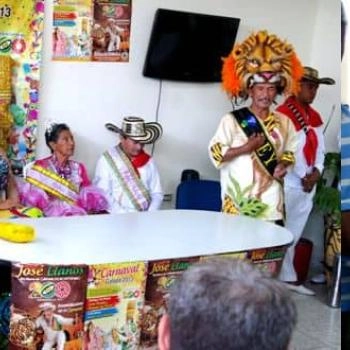
Live and Enjoy the Barranquilla Carnival
We’re sure that since you started planning your trip to Colombia, you’ve come across one repeated recommendation: go to the Barranquilla Carnival! Well, now it’s time to know that everyone who told you that... is absolutely right!
The Barranquilla Carnival is, without a doubt, the most important of all the festivals in Colombia. Its significance is such that UNESCO declared it a Masterpiece of the Oral and Intangible Heritage of Humanity.
This is due to the four intense days that make up the Carnival, which turn this cultural and folkloric event into a unique example of ethnic diversity, joy, dance, music, and tradition.
When is the Barranquilla Carnival celebrated?
The Carnival is held before Ash Wednesday, which usually falls in February or March. However, the celebration is so big that it includes a pre-carnival, which begins in mid-January.
From then on, until the official start of the Carnival, the joyful city of Barranquilla fills with street parties, parades, and processions where nearly 500 folkloric groups take part, along with local and international artists.
You may also be interested in: Feel the joy of the Barranquilla Carnival
Highlights of the Carnival
During the four days of the Barranquilla Carnival, there are moments that everyone eagerly awaits, such as the Battle of Flowers, which consists of a parade of floats, dance groups, and costumes. The event is presided over by the Carnival Queen, who dances and throws flowers to the spectators while being accompanied by a court of princes and princesses.
What makes the Battle of Flowers so special is that it is enlivened by the most traditional characters from the Carnival’s mythology, such as King Momo, María Moñitos, and the Alligator Man, who bring flavor and rhythm so you can fully enjoy this event.
Another key moment of the Barranquilla Carnival is, of course, its closing, when Joselito Carnaval —the most representative character of the celebration and the joy of the Caribbean coast— is symbolically buried.
During his funeral, Joselito is mourned and symbolically buried by joyful widows who celebrated with him the best of the Carnival.
This impressive finale marks the end of a four-day celebration that has been held every year since the 19th century, making Barranquilla a destination for all lovers of rhythm, dance, color, and culture.
Join one of the best fairs and festivals in Colombia and the second-largest carnival in the world. A Colombian tradition that will surround you with its color, rhythm, and joy.